
Choosing the Right Cabinet Wood: What Should You Paint, What Should You Stain, and Which Custom Upgrades Are Worth the Money?

When you're investing in new cabinetry, one of the first decisions should be whether you want the finished cabinets painted, stained, or left with a natural wood finish.
That decision should help determine which wood species you pay for. Which Custom Upgrades Are Worth the Money?
If I'm designing painted cabinetry, I'm looking for a material that will give us a smooth finish, good durability, appropriate stability, and good value. I'm generally not interested in paying a premium for dramatic wood grain that will disappear beneath opaque paint.
If we're staining the cabinetry or leaving it natural, the conversation changes.
Now the wood itself becomes part of the design.
I'm looking at:
Grain
Undertones
Knots and natural variation
Hardness
How the wood accepts stain
Grade
How neighboring doors look together
Whether we want dramatic grain or something straighter and quieter
Whether the grain will be matched from one panel to another
And that's only the beginning.
Because when homeowners see two custom-cabinet estimates that are thousands of dollars apart, the wood species may be only one part of the difference.
The hinges, drawer slides, drawer boxes, construction method, interior accessories, number of drawers, custom sizing, finish, decorative details, and installation can all significantly affect the final price.
So instead of asking:
“Which cabinet wood costs the most?”
I think the better question is:
“Where does spending more actually improve the appearance, durability, or function of my cabinetry?”
That's where good design—and smart budgeting—come together.
How We Know What Should You Stain, and Which Custom Upgrades Are Worth the Money? We START WITH THE FINISH, THEN CHOOSE THE WOOD
If You're Painting the Cabinets
For painted cabinetry, I generally want:
A relatively smooth surface
Good stability
Appropriate hardness for the application
Good paint performance
A material whose price makes sense underneath an opaque finish
Depending upon the cabinet maker and construction method, that may include poplar, maple, MDF components, plywood, or a combination of materials.
And no, using an engineered material in the appropriate place does not automatically make a cabinet inferior.
A well-built painted cabinet may use different materials for the door frame, center panel, cabinet box, shelving, drawer box, and finished end panels.
The important question is how the entire cabinet is constructed.
POPLAR
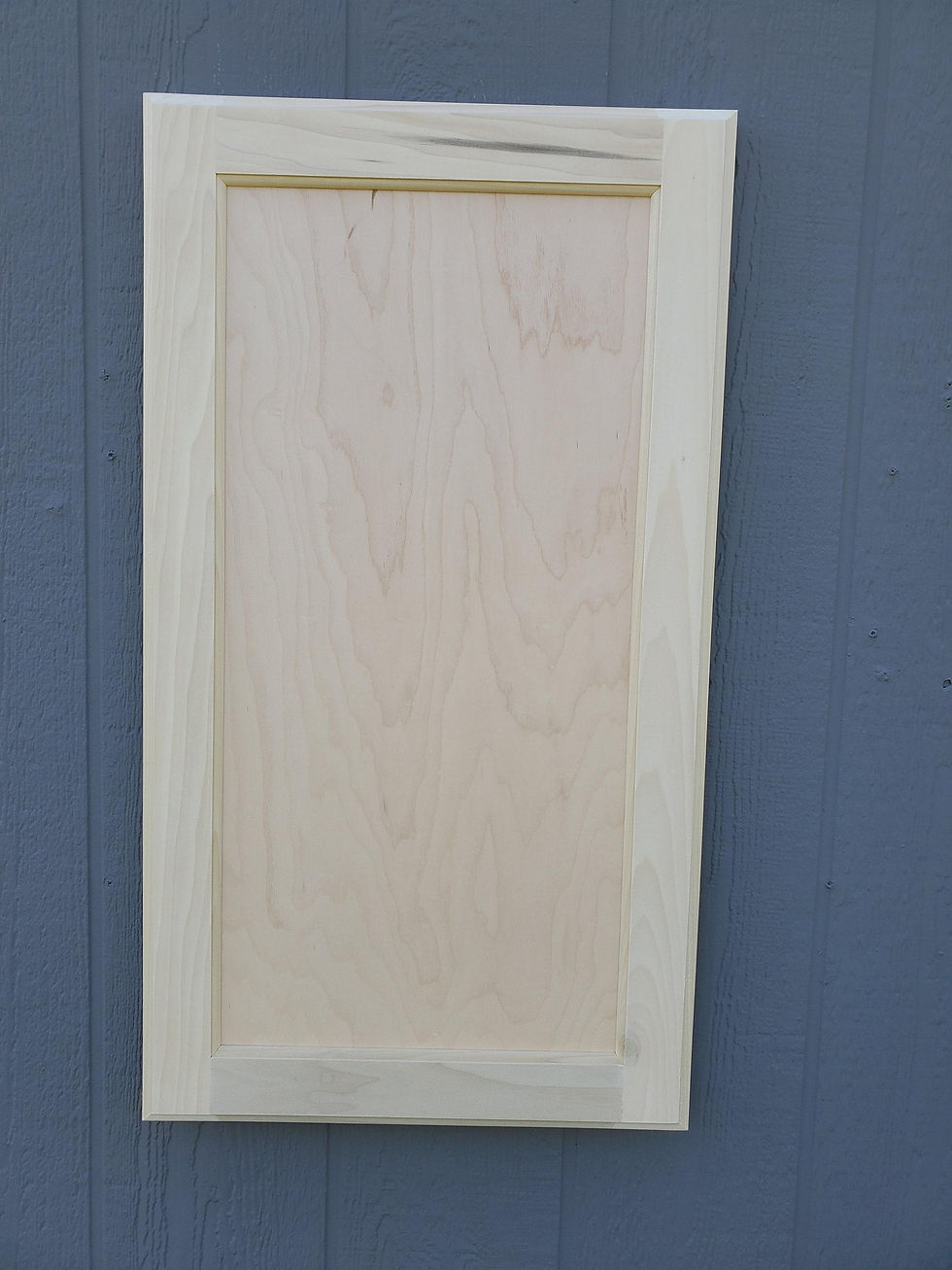
Best For: Painted Cabinetry
Poplar is one of the first woods I consider when we're talking about painted cabinetry and trying to use the budget wisely.
It machines well and provides a suitable surface for paint.
Most importantly, we're not paying a premium for a dramatic grain pattern we're going to hide.
Why It Makes Sense
If a homeowner wants a beautiful creamy-white painted kitchen, I'd often rather spend the additional money on:
Better drawer slides
More drawers
Better hinges
Trash pull-outs
Pantry storage
Interior organizers
rather than placing an expensive decorative wood beneath paint.
The Trade-Off
Poplar is comparatively soft and can dent more easily than hard maple or white oak.
So the application and the quality of the finish matter.
Would I Choose It for Stained Cabinets?
Usually not as my first choice.
Poplar can show significant natural color variation, and staining it evenly can be more challenging.
When visible wood grain is the star of the design, there are usually better choices.
Look for a relatively fine, understated grain. Unfinished poplar can range from creamy white to pale yellow and may also have green, brown, or grayish areas.
Design note: This is exactly why I consider it more valuable beneath paint than as an expensive showcase wood.
MAPLE

Best For: Painted Cabinetry, Natural Finishes, and Select Stained Applications
Maple is an excellent cabinet wood because it offers both durability and versatility.
Hard maple measures approximately 1,450 pounds-force on the Janka hardness scale, compared with about 1,350 for white oak.
So yes—hard maple can actually be harder than white oak.
That matters because homeowners sometimes assume white oak costs more simply because it must be stronger.
It doesn't.
White oak's premium price has much more to do with appearance, grade, market demand, cut, and grain selection.
Why I Like Maple for Painted Cabinets
Maple has a relatively tight, subtle grain.
That makes it an excellent candidate when we're trying to achieve a smooth painted finish.
It is also harder than poplar, which can be valuable in a heavily used kitchen.
Can Maple Be Stained?
Absolutely.
But maple can absorb penetrating stain unevenly, particularly with certain colors.
If we're staining maple, I want a finished sample on the actual species before approving an entire kitchen.
That rule applies to all natural wood:
Never assume a stain will look the same on two different species.
Maple generally has a light creamy appearance and a quieter grain than oak.
That's part of what makes it so versatile.
ALDER

Best For: Warm, Natural or Stained Cabinetry
Alder is a completely different look.
It can feel warm, casual, traditional, rustic, or transitional depending upon the grade and finish.
Some alder is selected for a cleaner appearance.
Other cabinetry intentionally uses knotty or character alder, where knots and variation become part of the design.
Why Choose Alder?
Alder can deliver beautiful natural warmth without requiring the premium associated with select or rift-sawn white oak.
It works particularly well when the homeowner actually likes variation and character.
The Trade-Off
Alder is considerably softer than maple or white oak.
That means it's more susceptible to dents.
That doesn't mean it shouldn't be used.
It simply means the homeowner should understand the material rather than choosing it based only on a small sample.
Alder often has warm honey, tan, peach, or light brown tones.
Character-grade alder may include visible knots and naturally changing grain patterns.
If you want every cabinet door to look almost identical, this may not be the right wood.
If you love natural character, it can be beautiful.
WHITE OAK

Best For: Natural or Stained Cabinetry Where the Grain Is Part of the Design
White oak is popular for a very good reason.
It can create warmth without immediately reading as the orange oak kitchens many homeowners remember from decades past.
With the right finish, white oak can work in:
Traditional interiors
Transitional homes
Contemporary kitchens
Modern organic designs
European-inspired spaces
Warm minimalist interiors
White oak is also durable, with a Janka hardness around 1,350 pounds-force.
Why Does It Cost More?
You're not simply paying for hardness.
You're paying for some combination of:
Species
Grade
Visual consistency
Market demand
Board selection
Cut
Grain
Waste
Matching
Finishing requirements
If a cabinet shop has to reject boards or portions of boards because they don't fit the intended visual appearance, you're also indirectly paying for the material that doesn't make it onto your cabinet doors.
Would I Paint White Oak?
Could you?
Yes.
Would I normally pay a white-oak premium only to hide one of its biggest selling points beneath opaque paint?
No.
If another suitable species or construction method will give me the painted result I want, I'd rather direct that budget toward something the homeowner will actually see or use.
Natural white oak can range from light beige and wheat tones to medium brown.
Plain-sawn boards often show more prominent cathedral-like grain.
That visible movement is part of the appeal.
RIFT-SAWN WHITE OAK
Best For: Premium Natural Cabinetry With Straighter,
This is where many homeowners notice a significant jump in price.
Rift-sawn white oak produces the long, relatively straight grain commonly associated with high-end contemporary cabinetry.
That appearance comes from how the log is cut.
And that cutting method creates more waste than ordinary plain-sawn lumber.
Then add:
Careful board selection
Grain direction
Color matching
Door placement
Panel sequencing
and suddenly you're purchasing much more than “oak cabinets.”
Grain Matching Can Increase the Price Even Further
Imagine a wall containing four tall cabinet doors.
At one level of cabinetry, four attractive white-oak pieces may simply be used.
At another level, the cabinet maker may carefully select and arrange material so that the grain visually continues from one door into the next.
That's not accidental.
It's design, material selection, labor—and sometimes considerable waste.
Photo Example: Rift-Sawn White Oak
The biggest thing to notice is the long, straighter vertical grain compared with the more varied grain commonly seen in plain-sawn white oak.
That quieter appearance is exactly what many homeowners are paying a premium to achieve.
WALNUT

Best For: Premium Natural Cabinetry and Statement Areas
Walnut brings something different to a room.
It naturally has richer brown coloration and can include wonderful movement and contrast.
Instead of staining a pale wood very dark, walnut allows us to work with a naturally deeper wood tone.
Do You Need Walnut Everywhere?
Absolutely not.
Sometimes I think a premium wood is more effective when it's used intentionally.
For example:
Kitchen island
Beverage bar
Butler's pantry
Built-in cabinetry
Powder-room vanity
Office
Statement cabinet wall
Combining painted cabinetry with a walnut island can sometimes produce a richer design than using walnut everywhere.
It can also help control cost.
Walnut generally ranges from medium to deep chocolate brown, often with lighter and darker movement through the grain.
Natural variation is part of its beauty.
SO WHICH WOOD COSTS THE MOST?
For cabinetry here in Northwest Arkansas, I would think about these as relative categories, not fixed price sheets.
$
Poplar
Often one of the more economical solid hardwood choices when used for painted cabinetry.
$$
Alder
Usually a step up when the wood will be seen and natural character is desired.
$$–$$$
Maple
Hard, durable, and versatile.
Its finished cabinet price depends heavily upon whether it will be painted or stained and upon the cabinet construction.
$$$–$$$$
White Oak
The grain itself becomes a feature of the design, and appearance-grade material can carry a significant premium.
$$$$+
Rift-Sawn White Oak
You're paying for the species plus the cut, selection, waste, and potentially grain matching.
$$$$+
Walnut
A premium species selected largely because of its naturally rich color and grain.
WHAT MIGHT CUSTOM CABINETRY COST IN NORTHWEST ARKANSAS?
This is where I want homeowners to be careful.
There is no meaningful way to say:
“White oak cabinets cost exactly X dollars per foot.”
Cabinetry isn't priced like carpet.
The exact same length of cabinetry can vary tremendously depending upon what's actually being built.
As a 2026 Northwest Arkansas planning guide, I would use approximately:
Cabinet Specification | Approximate Planning Range |
Painted custom cabinetry / simpler specification | $500–$750 per linear foot |
Painted maple or upgraded custom construction | $575–$850 per linear foot |
Alder or comparable stained custom cabinetry | $600–$900 per linear foot |
Stained/natural maple | $650–$950 per linear foot |
Natural or stained white oak | $750–$1,100 per linear foot |
Rift-sawn white oak | $900–$1,350+ per linear foot |
Walnut cabinetry | $950–$1,450+ per linear foot |
Premium inset, grain-matched or highly detailed cabinetry | $1,200–$1,700+ per linear foot |
Important: These are budgeting ranges, not bids.
Your exact NWA price will depend upon the cabinet maker, project size, ceiling height, layout, finish, species, door style, accessories, installation, and many other details.
A custom cabinet company serving Fayetteville, Bentonville, Rogers and Springdale currently advertises full kitchens starting around $15,000, with final cost depending upon size, materials and finish selections.
National 2026 pricing data also commonly places fully custom cabinetry around $500–$1,200+ per linear foot installed, with high-end inset and premium hardwood cabinetry extending beyond that.
So these NWA figures are meant to help establish a reasonable planning conversation—not replace an actual cabinet quote.
WHAT DOES THAT MEAN FOR A WHOLE KITCHEN?
Let's imagine a kitchen with approximately 25 linear feet of custom cabinetry.
A very rough Northwest Arkansas planning comparison might look like:
Painted Custom Cabinetry
Approximately $14,000–$21,000
Alder or Stained Maple
Approximately $16,000–$24,000
Natural or Stained White Oak
Approximately $19,000–$28,000
Rift-Sawn White Oak With Better Hardware and Accessories
Approximately $23,000–$35,000+
Premium Inset, Grain-Matched Cabinetry With Extensive Custom Storage
Approximately $30,000–$45,000+
Again, these are not quotes.
And we're talking about cabinetry, not necessarily:
Countertops
Appliances
Plumbing
Electrical
Demolition
Flooring
Backsplash
Painting
Structural work
Other remodeling costs
This is why a cabinet quote needs to be read carefully.
WHY CAN TWO CUSTOM CABINET BIDS BE SO DIFFERENT?
This is the part homeowners often don't see.
Both quotes may say:
CUSTOM CABINETRY
Yet one may include:
Basic hinges
Basic slides
Mostly door cabinets
Few accessories
Standard-size construction
Simple finished ends
while another includes:
Premium concealed hinges
Soft-close hardware
Full-extension slides
Hardwood drawer boxes
Dovetail drawers
Deep drawer banks
Trash and recycling pull-outs
Pantry pull-outs
Spice storage
Tray dividers
Finished interiors
Decorative end panels
Custom depths
Appliance panels
Inset construction
Grain matching
Those aren't equivalent cabinet packages.
WHY DO YOU PAY MORE FOR SOFT-CLOSE CABINETRY?
Most people understand what soft close does.
What they may not understand is that not all soft-close hardware is equal.
A better hinge or drawer runner doesn't simply prevent slamming.
Premium hardware may provide:
Smoother movement
Controlled closing
Better adjustment
Higher weight ratings
Concealed installation
Full-extension capability
Better long-term performance
And think about how often you open a kitchen drawer.
You're not paying for something you'll notice twice a year.
You're paying for something you'll interact with thousands of times over the life of the kitchen.
That's one of the places I personally think upgrading can make sense.
FULL-EXTENSION DRAWERS
This is another upgrade I value.
With a partial-extension drawer, a portion of the drawer remains underneath the countertop.
That means the things at the back can be harder to reach.
A full-extension slide allows you to pull the drawer far enough forward to access essentially the entire drawer.
It seems like a small thing.
Until you're looking for something buried in the back.
Then it becomes a very big thing.
HEAVY-DUTY DRAWER SLIDES
Not every drawer carries napkins and silverware.
A large kitchen drawer may hold:
Cast-iron pans
Dutch ovens
Dinner plates
Small appliances
Mixing bowls
Pantry goods
The hardware needs to be appropriate for that weight.
That's another reason two drawers that look identical from the outside may not have equivalent construction underneath.
DOVETAIL DRAWER BOXES
Dovetail construction is traditionally associated with better-quality wood drawers.
The joint mechanically interlocks the sides of the drawer box, creating a very strong connection.
Does every excellent modern drawer need to be dovetailed?
No.
There are other strong construction systems.
But when I'm comparing traditional wood drawer boxes, dovetail construction can indicate additional craftsmanship and labor.
And yes—additional craftsmanship costs money.
MORE DRAWERS = MORE MONEY
This is an easy one to overlook.
Imagine one 36-inch base cabinet.
Option A:
Two doors and one adjustable shelf.
Option B:
Three large drawers.
Option B costs more.
Why?
Because now we're paying for:
Three drawer boxes
Three pairs of slides
Three drawer fronts
More hardware
More fabrication
More installation and adjustment
But I frequently prefer that investment.
I'd much rather pull a drawer toward me to reach pots and pans than kneel down and dig through the back of a cabinet.
TRASH AND RECYCLING PULL-OUTS
A built-in trash center costs more than leaving a loose trash can at the end of the kitchen.
But look at what it accomplishes.
It:
Conceals the trash
Frees floor space
Keeps bins organized
Integrates them into the kitchen
Makes everyday cleanup easier
For most homeowners, this is something they'll use several times a day.
That's the kind of custom-cabinet feature I like paying for.
ROLL-OUT SHELVES
A stationary lower shelf is inexpensive.
A roll-out shelf requires:
Another box or tray
Drawer hardware
Slides
Fabrication
Installation
So of course it costs more.
But it can turn a deep, difficult cabinet into usable storage.
Before adding one, however, I still ask:
Would drawers work even better here?
Custom cabinetry should solve a problem—not simply accumulate accessories.
SPECIALTY STORAGE
This can include:
Spice pull-outs
Tray dividers
Baking-sheet storage
Knife drawers
Utensil inserts
Appliance garages
Mixer lifts
Blind-corner systems
Pantry pull-outs
Charging drawers
Custom dividers
Every moving component, organizer, and custom insert adds material and labor.
Some are absolutely worth it.
Some are not.
I don't believe in filling cabinets with gadgets just because they're available.
The accessory should match the way the homeowner actually lives.
WHY INSET CABINETRY COSTS MORE
With inset cabinetry, the door and drawer fronts sit inside the cabinet face frame.
That creates a beautiful furniture-like appearance.
It also requires much greater precision.
The gaps—or reveals—around each door and drawer need to be consistent.
Doors need to operate correctly while fitting inside an opening rather than simply covering it.
That precision means more labor.
Is Inset Better?
Not automatically.
It is a different construction style.
It can look beautiful and highly tailored, but you're largely paying for:
Appearance, craftsmanship, and precision.
And depending upon the design, inset construction can provide slightly less usable interior space than overlay cabinetry.
So it should be selected intentionally.
WHY CUSTOM WIDTHS AND DEPTHS COST MORE
Stock cabinetry is built around predetermined sizes.
Custom cabinetry can be designed around the room.
Instead of filling an awkward space with a wide filler strip, a cabinet maker can create a cabinet specifically for that opening.
We can also change:
Width
Height
Depth
Interior configuration
Appliance clearances
Panel sizes
Pantry dimensions
That requires individual engineering and fabrication.
You're paying for a cabinet that fits the house instead of making the house fit the cabinet.
FINISHED ENDS AND FURNITURE PANELS
The exposed end of a cabinet can be simple.
Or it can become a piece of furniture.
You might add:
Applied panels
Matching doors
Moldings
Decorative legs
Flush furniture ends
Integrated trim
Those details can make a tremendous visual difference.
But each one adds materials and labor.
If it's in a prominent location, I may absolutely recommend it.
If it's somewhere no one sees, I may save the client's money.
APPROXIMATE COST OF COMMON CUSTOM-CABINET UPGRADES
These figures vary considerably by cabinet shop, but for NWA budgeting purposes, homeowners might plan approximately:
Soft-Close Hinges
Approximately $5–$15+ per door above very basic hardware.
Premium Soft-Close / Full-Extension Drawer Hardware
Approximately $25–$75+ per drawer in incremental hardware cost, depending upon system and load rating.
Upgraded Hardwood or Dovetail Drawer Box
Often approximately $50–$150+ per drawer above simpler construction.
Drawer Bank Instead of Basic Door Cabinet
Often $300–$800+ additional depending upon size and hardware.
Trash / Recycling Pull-Out
Approximately $300–$700+.
Roll-Out Shelf
Approximately $150–$350 each.
Spice Pull-Out
Approximately $250–$600+.
Tray Dividers
Approximately $100–$300.
Specialty Pantry Pull-Out
Approximately $500–$1,500+, with sophisticated hardware systems potentially costing more.
Furniture-Style Finished End
Approximately $250–$800+, depending upon complexity.
Integrated Appliance Panel
Approximately $500–$1,500+ per panel, excluding the appliance.
Inset Construction
A useful planning allowance is often roughly 15–30% above comparable overlay cabinetry, depending upon cabinet maker and project.
Rift-Sawn / Carefully Grain-Matched White Oak
It may add roughly 15–35% or more compared with a more straightforward white-oak specification, depending upon grade, cut, selection, and matching.
Again:
These are planning allowances, not universal retail prices.
WHERE WOULD I SPEND THE MONEY FIRST?
If we have a limited cabinet budget, this is generally how I think about priorities.
1. The Layout
Before anything else.
A badly planned expensive kitchen is still badly planned.
2. Good Hinges and Drawer Slides
They're used constantly.
3. Full-Extension Drawers
Let me reach what's actually in the drawer.
4. Drawers Where Drawers Make Sense
Especially in lower cabinetry.
5. Trash and Recycling Storage
Simple, practical, and used every day.
6. Durable Drawer Construction
Particularly on large drawers carrying substantial weight.
7. Useful Interior Storage
Not gadgets.
Useful storage.
8. The Wood Species
If I'm painting everything, I don't necessarily need the most expensive wood.
If the grain is visible, now I'll consider spending substantially more on the wood itself.
WHERE WOULD I SAVE?
I wouldn't automatically:
Fill every cabinet with specialty inserts
Use premium wood under opaque paint
Specify rift-sawn oak where nobody will notice the grain
Add decorative panels to hidden ends
Pay for an expensive accessory the homeowner won't use
Choose inset cabinetry simply because someone said it's “better”
Custom doesn't mean add everything.
Custom means we get to decide where everything belongs.
HOW TO COMPARE TWO CABINET QUOTES
Before deciding one cabinet maker is expensive and another is inexpensive, compare what they're actually providing.
WOOD & FINISH
Wood species
Wood grade
Paint or stain
Plain-sawn or rift-sawn
Veneer vs. solid components
Grain matching
Finish system
CABINET BOXES
Plywood or engineered construction
Thickness
Back construction
Shelf thickness
Finished interiors
Finished ends
DRAWERS
Drawer-box material
Drawer-bottom thickness
Joinery
Dovetail construction
Load capacity
Full extension
Soft close
DOORS
Hinge manufacturer
Soft close
Adjustability
Overlay or inset
STORAGE
Number of drawers
Roll-outs
Trash pull-out
Pantry system
Spice storage
Tray dividers
Specialty inserts
CUSTOMIZATION
Custom widths
Custom depths
Tall cabinetry
Appliance panels
Furniture ends
Crown and trim
Integrated lighting details
Grain matching
INSTALLATION
Delivery
Installation
Scribing to walls
Adjustments
Punch-list work
Warranty/service
Only after comparing those items are you really comparing one quote to another.
THE BOTTOM LINE
If you're painting your cabinets, choose a material and construction method that produces the smoothness, durability, and quality you want.
You don't automatically need to buy expensive grain you're going to hide.
If you're staining your cabinets or leaving them natural, the wood becomes much more important.
That's when the additional expense of:
White oak
Rift-sawn white oak
Walnut
or another premium species may absolutely make sense.
But don't stop your cabinet comparison at the wood.
A significant part of the difference between an inexpensive cabinet package and a truly well-built custom cabinet package may be hidden behind the doors:
better hinges, stronger slides, full-extension drawers, dovetail boxes, useful pull-outs, custom dimensions, premium finishes, and more precise craftsmanship.
Those details may not be the first thing someone notices in a photograph.
They're the things you notice every day when you live in the house.
And that's where I think thoughtful cabinetry earns its price.

Final Thought...Spend where you can see the difference. Spend where you can feel the difference. And most importantly, spend where it makes your home function better.
Life is More Fun Beautifully Done 🦋
Beautifully Done Interior DesignNorthwest Arkansas
emodeling

Comments