
The Domino Effect of Interior Design: Interior Design Planning

The Domino Effect of Interior Design: Why Moving One Light Can Change an Entire Room...A homeowner may look at a room and think, “That light fixture just needs to move over a little.”
Simple enough, right?
Sometimes it is. But in interior design, even one seemingly small decision can create a chain reaction that affects several other parts of a project and start the interior design planning process all over again.
That is what I call the domino effect of interior design.
A light fixture is not simply hanging from a ceiling. It relates to the furniture below it, the architecture around it, the cabinetry nearby, the electrical plan, the ceiling finish, the wall color, and the way your eye moves through the entire space.
When one piece changes, several other pieces may need to change with it.
It Starts With the Electrical
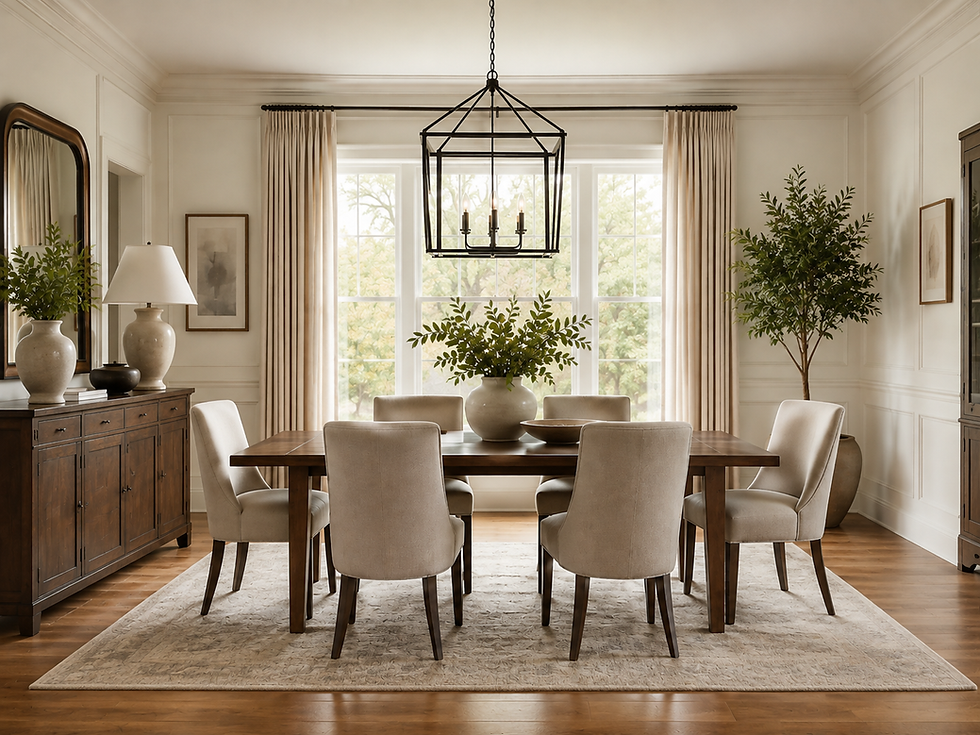
Imagine a dining room where the chandelier is several inches off-center from the dining table.
The obvious solution is to move the chandelier.
But before the fixture can move, an electrician may need to relocate the electrical box, reroute wiring, determine whether additional support is needed, and make sure the switch placement still makes sense.
What looked like a simple decorating decision has already become an electrical project.
And we are only at the first domino.
Then Comes the Ceiling Repair and more Interior Design Planning
Once the electrical box is relocated, the original opening in the ceiling usually has to be repaired.
That can mean drywall work, patching, sanding, and possibly matching an existing ceiling texture.
Depending on the age and condition of the ceiling, creating a repair that completely disappears can take more work than homeowners expect.
The goal is not simply to cover the old hole. The goal is to make it look like the old hole was never there.
And Then There Is Paint...and again more Interior Design Planning
Now we have a repaired ceiling.
Can we simply touch up that one spot with paint?
Sometimes.
Often, however, paint changes slightly over time. Sunlight, age, sheen, previous touch-ups, and even the original application method can make a small patch stand out.
That may mean repainting a larger portion of the ceiling—or sometimes the entire ceiling—to create a seamless finish.
One relocated chandelier has now involved an electrician, drywall repair, and a painter.
Furniture Placement May Change Too
Here is where interior design really comes into play.
Why were we moving the chandelier in the first place?
Usually because something else in the room was not properly aligned.
Maybe the dining table needs to move.
Maybe the room has been arranged around an incorrectly placed fixture for years.
Once the light is centered correctly, we may discover that the furniture should be repositioned for better balance, traffic flow, and functionality.
Suddenly, the room feels completely different—even though the original request was simply to move a light.
Cabinetry and Built-Ins Can Be Affected
In kitchens, dining rooms, offices, and living spaces, lighting often needs to coordinate with cabinetry and built-ins.
Pendant lights over an island need to relate to the island dimensions.
Sconces need to work with mirrors and cabinetry.
A chandelier needs to make sense within the architecture of the room.
If cabinetry is being added, removed, widened, or repositioned, lighting locations may need to change as well.
And if lighting changes after cabinetry has already been designed, measurements and visual balance sometimes need to be reevaluated.
This is one reason I like design decisions to be made as early in the process as possible.
Art, Mirrors, and Accessories Are Part of the Equation
Good design is about relationships.
A light fixture may affect where artwork is centered.
A wall sconce may determine the size of a mirror.
A chandelier may change the visual center of a dining room.
Once the architectural elements are properly placed, accessories and furnishings can be arranged to support them instead of fighting against them.
That is when a room begins to feel intentional.
You may not immediately know why a beautifully designed room feels right.
You simply know that it does.
Usually, it is because dozens of small decisions are working together.
One Change Can Affect the Budget
This is also why something that sounds like a very small change can occasionally affect a remodeling budget more than expected.
Moving one fixture could involve:
Electrical work
Drywall repair
Ceiling texture
Painting
Furniture repositioning
Cabinetry adjustments
Additional labor
Additional scheduling
None of those things necessarily make the change a bad idea.
Sometimes moving that fixture is exactly what the room needs.
The important thing is understanding the entire effect of the decision before the work begins.
The Same Thing Happens Throughout a Remodel
Lighting is just one example.
Move a sink, and plumbing may change.
Change the size of a kitchen island, and pendant placement may change.
Choose a thicker countertop material, and other measurements may need to be adjusted.
Change a backsplash tile, and outlets, grout color, cabinet finishes, and countertop colors may suddenly look different.
Move a fireplace, and electrical, drywall, flooring, furniture placement, and television placement can all be affected.
Interior design really is a series of connected decisions.
The earlier those connections are considered, the smoother a project usually becomes.
This Is Why Planning Matters
One of the most valuable parts of professional interior design happens long before the finished room is photographed.
It happens during the planning.
We are looking ahead and asking questions such as:
Does this light line up with the table?
Will this cabinet interfere with anything?
Where will the furniture sit?
What happens to the ceiling when this moves?
Does the electrician need to know something before the drywall work begins?
Will this selection affect another trade?
Those questions may not be glamorous, but they can make the difference between a project that constantly encounters surprises and one that moves forward with a well-thought-out plan.
Beautiful Design Is About the Big Picture
Interior design is certainly about beautiful finishes, furnishings, colors, lighting, and materials.
But it is also about understanding how everything connects.
A designer should not only see the light fixture.
We should see the ceiling above it, the table below it, the furniture around it, the cabinetry nearby, the artwork across from it, and the people who will actually live in the space.
That is the difference between decorating individual pieces and designing an entire room.
Sometimes moving one light really can change everything.
And when all of those little dominoes fall into the right place, the result feels effortless—even when a great deal of thought went into making it that way.
Life is more fun Beautifully Done 🦋



Comments